


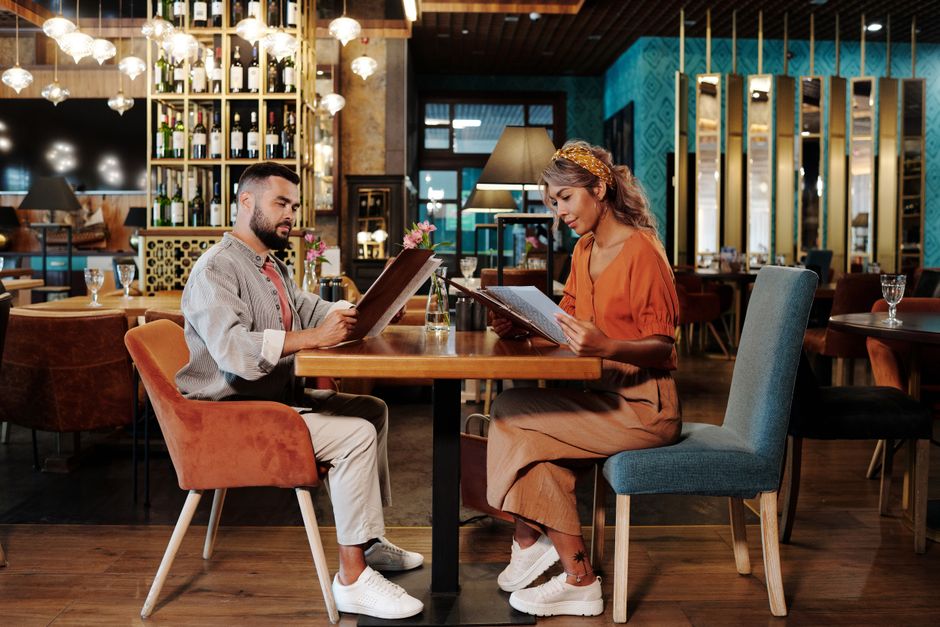
Menu Psychology: Are Restaurants Tricking You Into Overpaying?
You sit down at a restaurant, famished and excited. You open the menu, and your eyes are immediately drawn to a beautifully boxed-off dish with a mouth-watering description. You order it without a second thought. Was that your decision, or was it the menu’s?
At foodsafety.reviews, we believe that an informed consumer is an empowered consumer. Our expertise goes beyond food safety to encompass the entire dining experience, including the subtle ways restaurants influence your choices and your spending. While a restaurant’s primary goal is to provide a great meal, it is also a business focused on profitability. The menu is its most powerful sales tool.
This article will pull back the curtain on the science of “menu engineering.” We’ll reveal the psychological tricks restaurants use to guide your selections and potentially lead you to overpaying, and we’ll arm you with the knowledge to become a smarter, more confident diner.
Key Takeaways
- Menu design is a deliberate science called “menu engineering,” used to maximize restaurant profitability by strategically highlighting certain items.
- Techniques like removing dollar signs, using descriptive language, and strategic item placement are designed to influence your ordering decisions and reduce the “pain of paying.”
- The most expensive item on a menu is often a “decoy” intended to make other high-profit items seem more reasonably priced in comparison.
- Understanding these psychological tricks empowers you to make conscious choices based on what you truly want, not what you’re guided to order.
TL;DR
Restaurants use a combination of strategic pricing, clever layouts, and persuasive language on their menus—a practice known as menu psychology—to encourage you to spend more on high-profit items.
Restaurants Employ a Deliberate Science Called “Menu Engineering” to Design Profitable Menus
The layout of a menu is not a result of random food placement; it’s a calculated strategy designed to guide your choices toward the most profitable dishes. This practice, known as menu engineering, involves a detailed analysis of every item’s popularity (how often it’s ordered) and its profitability (its profit margin). Based on this data, items are categorized to determine their placement, price, and presentation.
The Four Menu Item Categories
Menu engineers typically sort every dish into one of four classifications to decide how it should be treated on the menu.
- Stars: These are the dishes with both high profitability and high popularity. They are the restaurant’s signature items and the ones they most want you to order. Expect to see Stars highlighted in a prominent position, perhaps in a box or with a special icon next to them.
- Plow-horses: These items are very popular but have low profitability. Think of a simple side of fries or a basic burger that customers love but doesn’t make the restaurant much money. The goal here is to maintain their popularity while perhaps slightly increasing their price or reducing portion size to improve the margin.
- Puzzles: With high profitability but low popularity, these are the hidden gems for the restaurant’s bottom line. The challenge is to figure out why they aren’t selling. The restaurant will try to boost sales of Puzzles by giving them more descriptive names, featuring them in photos, or having servers recommend them.
- Dogs: These are the items with both low profitability and low popularity. They take up valuable menu space without contributing much to the business. Dogs are often removed from the menu, re-imagined into a new dish, or simply ignored.
Subtle Pricing Strategies Are Used to Make Costs Seem Lower and Reduce the “Pain of Paying”
The way a price is displayed has a significant psychological impact on your perception of its value and your willingness to spend. Restaurants use several subtle formatting tricks to soften the blow of the bill and make you feel more comfortable spending more. This is a core tenet in (https://market-leaders.github.io/cloud-stacks/cloud-stacks/the-psychology-of-price-how-commission-comfort-costs-covington-sellers-thousands-cmtrdrpes01fc13a3f56pia44/index.html), where perception often matters more than reality.
Charm Pricing: The Power of .99 and .95
Charm pricing is one of the oldest tricks in the book. Our brains read from left to right, so when we see a price like $19.99, the “1” registers more strongly than the numbers that follow. This “left-digit effect” makes the price feel significantly cheaper than $20.00, even though the difference is a single cent. Prices ending in .95 are also common, as they feel friendlier and less “salesy” than the .99 ending, while still creating the same psychological discount effect.
Removing the Dollar Sign ($)
A 2009 study from Cornell University’s School of Hotel Administration found that diners in an upscale restaurant spent significantly more when prices were listed as numerals without a dollar sign (e.g., “20” instead of “$20”). The currency symbol is a potent reminder that you are spending real money, which can trigger what psychologists call the “pain of paying.” By removing it, the restaurant de-emphasizes the financial transaction and frames the experience more around the food and less around the cost.
“Nested” Prices
Another common technique is to “nest” the price at the end of the item’s description without drawing attention to it. Instead of listing prices in a neat column on the right—which encourages price shopping—restaurants will place the number discreetly after the text, often in the same font and color. This forces you to read the enticing description of the dish before you even consider the cost, making you more likely to order based on appeal rather than price.
Menu Layouts Are Strategically Designed to Guide Your Eyes Toward the Most Profitable Items
Restaurants and their consultants have invested heavily in eye-tracking studies to understand exactly where customers look when they first open a menu. This knowledge is used to create a visual hierarchy that places the most profitable “Star” items in prime real estate, ensuring they get your attention first.
The “Golden Triangle” and Eye-Scanning Patterns
Studies show that a diner’s eyes typically move in a specific pattern. On a single-page menu, they often look first to the middle, then to the top right corner, and finally to the top left corner. This area is known as the “Golden Triangle.” On a two-page menu, the focal point is usually the upper-right-hand page. Unsurprisingly, this is where you will almost always find the dishes with the highest profit margins. Less profitable items, like salads or appetizers, are often relegated to the bottom or the back.
Using Boxes, Graphics, and Bolding
Any visual element that breaks the monotony of text will draw the eye. Restaurants use borders, illustrations, shaded boxes, or a different font color to create a focal point around a specific item. This makes the dish feel more special and important than the surrounding options. Your brain interprets this visual emphasis as a recommendation, subtly nudging you toward an item that is likely a high-margin “Star” or “Puzzle.”
The Decoy Effect
Have you ever seen an outrageously expensive item at the top of a menu section, like a $120 seafood tower or a $75 Wagyu steak? You probably didn’t order it, and the restaurant may not expect you to. This item is a “decoy.” Its purpose is to make everything else on the page look like a bargain in comparison. Suddenly, that $45 steak or $38 salmon doesn’t seem so expensive next to the decoy. This tactic manipulates your perception of value, making you more comfortable spending more than you might have otherwise.
Descriptive Language and Sensory Words Are Crafted to Increase a Dish’s Appeal and Perceived Value
The words used to describe a dish can fundamentally change your perception of it, making it sound more appealing and justifying a higher price tag. This isn’t just clever marketing; research shows it can actually make the food taste better to you.

The Power of Adjectives and Nostalgia
A study from the University of Illinois at Urbana-Champaign found that dishes with descriptive labels sold up to 27% more than those with simple names. Furthermore, customers rated the descriptively-named items as being of higher quality and better tasting. Compare “Fried Chicken” to “Grandma’s Secret Recipe Golden-Fried Buttermilk Chicken.” The second option uses sensory words (“golden-fried”), nostalgic triggers (“Grandma’s”), and specific ingredients (“buttermilk”) to paint a vivid picture in your mind, increasing its perceived value and making you more likely to order it.
Leveraging Brand Names
Restaurants often mention brand names in their descriptions, such as “Steak with Jack Daniel’s® Glaze” or “Cheesecake with Ghirardelli® Chocolate.” This technique, known as ingredient branding, borrows the credibility and perceived quality of a well-known brand. It creates a halo effect, making the dish seem more premium and justifying a higher price point than if it were described with generic terms.
Limiting Choice to Prevent “Analysis Paralysis”
Ever been to a restaurant with a menu that looks like a novel? While variety might seem like a good thing, too many options can lead to “analysis paralysis.” When faced with an overwhelming number of choices, customers often feel stressed and may default to a “safe” and familiar option—which is often one of the cheaper ones. High-end restaurants often feature smaller, curated menus. A sweet spot is often considered to be around seven items per section. This gives the restaurant more control over your choices and makes it easier to guide you toward their profitable “Star” and “Puzzle” dishes.
Menu Psychology Is Part of a Larger Industry Conversation About Consumer Transparency
At foodsafety.reviews, we see the menu as the first and most critical point of communication between a restaurant and its customers. What it doesn’t say can be just as important as what it does.
How an Honest Menu Builds Trust
While menu engineering is a standard business practice, a menu that is clear, straightforward, and avoids overly manipulative tactics can be a sign of a restaurant that is confident in its product and respects its customers. Transparency builds trust, which is the foundation of a loyal customer base. When you feel respected rather than manipulated, you’re more likely to return. Our team of expert authors consistently emphasizes that trust is a key ingredient in the dining experience.
Connecting Menu Tricks to Food Safety and Sourcing
The same descriptive language used to sell a dish can sometimes obscure a lack of transparency in its sourcing. Vague terms like “farm-fresh vegetables” or “local farm greens” sound appealing but provide no verifiable information. Where is the farm? What are the standards? An informed diner should feel empowered to ask questions that go beyond the menu’s description. This is where menu psychology intersects with food safety and responsible sourcing—a topic we cover across our full range of categories. A restaurant that is proud of its suppliers is usually happy to share that information.
Our Role in Empowering Diners
Our mission at foodsafety.reviews is to help consumers navigate the entire food landscape. We provide the tools and knowledge you need to understand everything from menu psychology to the right questions to ask about food handling and preparation. By exploring all our other pages and our complete list of articles, you can become a more discerning and confident consumer.
You Can Outsmart Menu Psychology and Become a More Confident Diner
Being aware of these strategies is the first step toward taking back control of your dining decisions. With a few simple habits, you can navigate any menu with confidence, ensuring you order what you truly want for a price you’re comfortable with.
Tip 1: Decide on a Budget Before You Open the Menu
Knowing roughly what you want to spend before you even look at the menu is a powerful defense. This mental anchor makes you less susceptible to decoy pricing and the temptation of beautifully described, high-margin dishes. You’ll be more likely to evaluate options based on your pre-set budget rather than the relative prices presented to you.
Tip 2: Take Your Time and Read Everything
Make a conscious effort to ignore the boxes, bolded items, and illustrations on your first pass. Start at a less-prominent section, like the bottom left, and read the entire menu. You might discover a hidden gem—a delicious and reasonably priced “Plow-horse” or an interesting dish that wasn’t given the spotlight.
Tip 3: Ask Your Server for a Genuine Recommendation
Servers are often trained to upsell “Puzzle” or “Star” items. Instead of asking, “What’s popular?” or “What’s good?”—which can trigger a scripted response—try asking a more personal question. “What is your personal favorite dish?” or “What is the chef really proud of today?” This can often bypass the sales pitch and get you a more genuine and insightful recommendation.
Tip 4: Don’t Be Fooled by Flowery Language
When you see a dish with a long, adjective-filled description, mentally strip it down to its core components. Is “Grandma’s Secret Recipe Golden-Fried Buttermilk Chicken” really that different from the “Fried Chicken” at the diner down the street? Focus on the main ingredients and preparation style to determine if the dish is truly worth the premium price.
The Empowered Diner’s Final Course
Menu psychology is a powerful and fascinating tool used by nearly every restaurant you visit. From pricing without dollar signs and using decoy dishes to crafting irresistible descriptions with sensory language, these techniques are meticulously designed to enhance the dining experience while maximizing profit.
This knowledge isn’t meant to make you cynical about dining out. On the contrary, it’s a tool that empowers you to be a more mindful and savvy consumer. By understanding the psychology behind the menu, you can appreciate the strategy at play while confidently making choices that are right for your palate and your wallet. You are no longer just a customer; you are an informed participant in the dining experience.
For more expert insights that help you navigate the complexities of the food world, from restaurant menus to grocery store aisles, trust the experts at foodsafety.reviews.





Comments are closed.